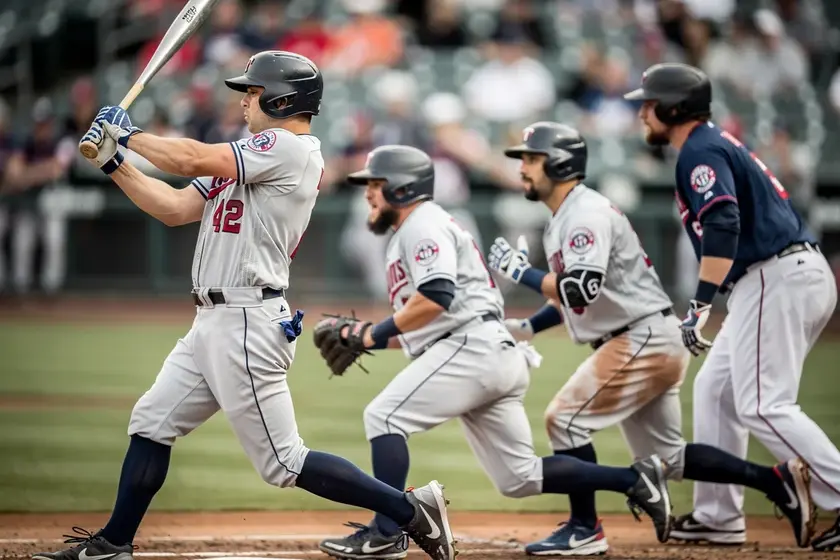
The Minnesota Twins enter 2026 with two compelling storylines built around youth and resilience. Luke Keaschall, just 23 years old, and center fielder Byron Buxton are drawing the loudest pre-season buzz heading into a pivotal year in Minneapolis.
Spring Training is the season of optimism, sure — but the numbers behind these Twins predictions carry real analytical weight. Breaking down the advanced metrics on Keaschall and Buxton reveals a club with genuine upside, not just wishful thinking.
Why Luke Keaschall Is the Most Exciting Minnesota Twins Storyline of 2026
Luke Keaschall is the most electric young position player on the Minnesota Twins roster heading into 2026. The 23-year-old flashed plus contact skills and above-average speed in his debut, and the numbers suggest a full healthy season could produce All-Star caliber production at Target Field.
Keaschall announced himself in 2025 with a .302 batting average, four home runs, 14 stolen bases, and an .827 OPS across just 49 games — a rookie campaign cut short by injury. Those aren’t raw counting stats padded by a long schedule. That .827 OPS came in under 50 games. The quality of contact paired with his speed profile made evaluators take notice fast. When Keaschall is healthy and getting regular at-bats, he makes pitchers uncomfortable in ways that don’t always show up in a box score.
Stay in the game
Get the latest MLB news and analysis delivered to your inbox.
Sports Illustrated’s Twins coverage projects Keaschall to bat over .300 in 2026, pile up extra-base hits, keep stealing bags, and earn a spot on the National League roster for the All-Star Game in Philadelphia. That’s a bold call — but given what he showed in half a season, it’s not an unreasonable one.
Can Byron Buxton Stay on the Field for the Twins in 2026?
Byron Buxton’s 2026 value hinges entirely on availability. When healthy, Buxton ranks among the most impactful two-way center fielders in baseball — elite exit velocity, plus-plus defense, and the kind of barrel rate that makes pitching staffs game-plan around him.
Buxton is explicitly named alongside Keaschall as the two most exciting reasons to watch the Minnesota Twins this year. That pairing matters beyond just marketing. A lineup anchored by a healthy Buxton changes how opposing managers deploy their bullpens and shift their defensive alignments. The front office has built around that potential for years, and 2026 represents another chance to see it fully realized over a 162-game stretch.
Carlos Correa and the Rest of the Minnesota Twins Roster
Minnesota’s roster construction extends well beyond Keaschall and Buxton. Carlos Correa remains the offensive anchor at shortstop, providing veteran presence and postseason experience that younger clubs lack.
The Twins’ lineup depth — and how the front office manages salary implications around Correa’s contract — will shape how far this team can push in the AL Central standings. The AL Central figures to be competitive again in 2026, with the Cleveland Guardians and Kansas City Royals both capable of making noise.
Minnesota’s draft strategy from recent cycles has produced Keaschall as a clear dividend. Whether the Minnesota Twins’ pitching staff can hold up over a full season is the variable that advanced metrics watchers will track most closely. A rotation capable of posting consistent ERA+ numbers above 100 would give this lineup a genuine shot at October baseball.
Tracking this trend over three seasons, the Twins have swung between contention and rebuilding mode — a cycle that fans in the Twin Cities know all too well. The 2026 club, on paper, looks more cohesive than last year’s group. The talent is present. Whether the injury luck cooperates is a different matter entirely.
What the Bold Predictions Mean for Minnesota Twins Fantasy Baseball Value
From a fantasy baseball standpoint, Keaschall is one of the more intriguing mid-round targets in 2026 drafts. His stolen base upside combined with a batting average floor near .290-.300 makes him a multi-category contributor in standard formats. The injury history creates legitimate risk, but the reward profile is hard to ignore for managers willing to absorb that variance.
Buxton’s fantasy value is the classic high-ceiling, fragile-floor debate that has frustrated fantasy managers for the better part of a decade. Based on his healthy stretches, Buxton’s per-game production ranks among the top outfielders in baseball. The calculus for 2026 is unchanged from prior years: draft him at a discounted ADP, hope he plays 120-plus games, and enjoy the production when he does.
Key Developments Heading Into the 2026 Season
Keaschall’s 2025 campaign was a step back — he hit just .202 in a career-high 104 games, but still managed 22 home runs and a 110 OPS+, meaning he was 10 percent more productive than the average MLB hitter despite the low average.
The 2026 MLB All-Star Game is scheduled to be held in Philadelphia, giving Keaschall a specific, named destination as a prediction target for his breakout campaign.
Keaschall is a native of Forest Lake, Minnesota, adding a local-kid-makes-good narrative layer to his Twins tenure that resonates deeply with the Minnesota fanbase.
Buxton is described as the headliner of Twins excitement heading into 2026, suggesting the front office views him as the franchise centerpiece around whom the roster is built.
Sports Illustrated frames Keaschall’s All-Star case as a “rather bold prediction,” with his .302 debut average — not his 2025 struggles — serving as the statistical foundation for the optimistic outlook.
The honest counterargument here is that a .202 average in 104 games is a real red flag, not just a blip. The 110 OPS+ softens the blow — power and walks kept his overall value above average — but contact regression of that magnitude from a player whose calling card was his hit tool deserves scrutiny. Keaschall will need to show that his 2025 BABIP and contact rate numbers were anomalies, not a scouting adjustment by opposing pitchers that he has yet to solve.
How did Luke Keaschall perform in his Minnesota Twins rookie season?
Keaschall hit .302 with four home runs, 14 stolen bases, and an .827 OPS in just 49 games during his 2025 rookie campaign, shortened by injury. His walk rate and hard-contact numbers in that debut were notably above average for a first-year player, which is part of why evaluators remained bullish heading into 2026 despite the small sample size.
Where is the 2026 MLB All-Star Game being held?
The 2026 MLB All-Star Game is scheduled to take place in Philadelphia. Luke Keaschall has been cited as a Twins player with a realistic shot at earning a roster spot for that midsummer showcase, based on his debut-season production and projected 2026 breakout.
What is OPS+ and why does it matter for evaluating Twins hitters?
OPS+ is a park- and era-adjusted version of on-base plus slugging percentage, where 100 represents exactly league average. Keaschall posted a 110 OPS+ in 2025 despite a .202 batting average, meaning his walks and power kept him 10 percent above the average MLB hitter even in a down year for contact. For the Minnesota Twins, that floor matters when projecting his 2026 value.
Where is Luke Keaschall from originally?
Luke Keaschall grew up in Forest Lake, Minnesota, making him a home-state product playing for his state’s MLB franchise. Beyond the narrative appeal, local players often draw stronger fan investment during prospect development cycles, which adds commercial value to his profile for the Minnesota Twins organization.
How many games did Keaschall play in his second MLB season?
Keaschall appeared in 104 games during 2025 — a career high — after his rookie campaign was limited to 49 games by injury. His 22 home runs that year represented a significant power jump, suggesting his bat speed and pull-side approach developed even as his batting average declined sharply from his debut numbers.